Writing Back to Anna Ruth: “Kip” and the Magic of Fairgrounds
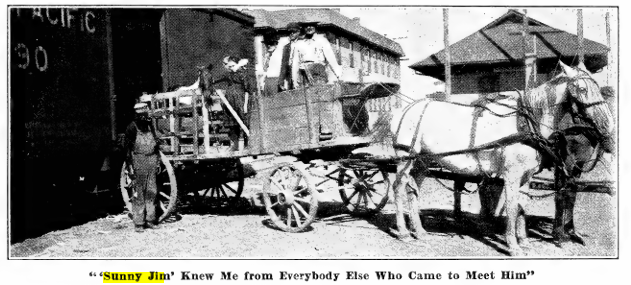
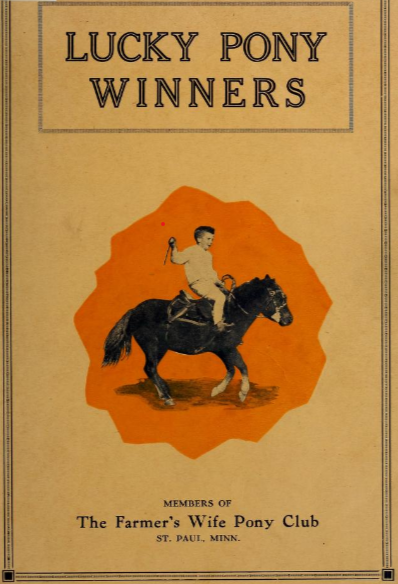
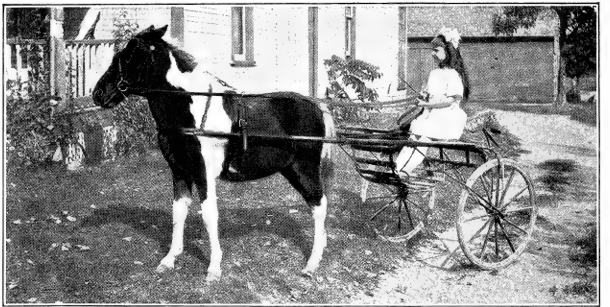
In the early 1900s, a young girl named Anna Ruth won a pony named Kip. Here is an excerpt from her letter:
I want all my friends to know what a lovely pet I now have. When I received the telephone message, telling me that “Kip” had arrived, I just couldn’t get to the depot fast enough. Mama, papa and I went right away. They had already taken him out of the crate and he was in a livery barn and, bless his little heart, when he heard us coming he whinnied. It was the sweetest sound to me just then I tell you. Papa put the saddle and bridle on, which came in the morning, and then helped me on his back. A crowd commenced to gather around and all said, “Is that the little pony she got by taking subscriptions for The Farmer’s Wife?” We told them yes and wasn’t he a little beauty. They all were as excited as I about him.
On our way home we passed the Fair Grounds where papa has horses in training. All the trainers said he was a fine one and their horses weren’t in it with “Kip.”
If I could write back to Anna Ruth, here is what I’d say:
Dear Anna Ruth,
Fairgrounds are a special place.
Some of my happiest memories as a child and with my kids were made at the fairgrounds in our county.
Of my three children, my oldest daughter, Loryn, embraced 4-H and fair week the most. Anna Ruth, you probably do not even know what I’m referring to when I speak of 4-H. Or, maybe you do? Here is some quick history on 4-H from 4-H.org:
In the late 1800’s, researchers discovered adults in the farming community did not readily accept new agricultural developments on university campuses, but found that young people were open to new thinking and would experiment with new ideas and share their experiences with adults. In this way, rural youth programs introduced new agriculture technology to communities.
The idea of practical and “hands-on” learning came from the desire to connect public school education to country life. Building community clubs to help solve agricultural challenges was a first step toward youth learning more about the industries in their community.
A. B. Graham started a youth program in Clark County, Ohio, in 1902, which is considered the birth of 4‑H in the United States. The first club was called “The Tomato Club” or the “Corn Growing Club”. T.A. Erickson of Douglas County, Minnesota, started local agricultural after-school clubs and fairs that same year. Jessie Field Shambaugh developed the clover pin with an H on each leaf in 1910, and by 1912 they were called 4‑H clubs.
The passage of the Smith-Lever Act in 1914 created the Cooperative Extension System at USDA and nationalized 4‑H. By 1924, 4‑H clubs were formed and the clover emblem was adopted.
As you can see, 4-H had its beginnings around the time that you were a little girl. AND, 4-H started in your state in a county near you!
Geographically, you were located in the heart of the start of 4-H! In fact, the beginnings of 4-H in Clark County, Ohio happened to be about thirty-three miles from you in Logan, County, Ohio.
Did you and your family know about “The Tomato Club” or the “Corn Growing Club” for kids? Did you join 4-H?
The 4-H program was incredibly important to my oldest daughter, Loryn. Fair week was the culmination of a year’s worth of planning, hard work, and preparation.
In the early spring, we would look through the 4-H Fair Book and talk about what project areas that Loryn would like to participate in. Through the years, she entered quilting, photography, scrapbooking, collections, cooking, gift wrapping, great pumpkin, breeding stock chickens, horse science, poultry science, woodworking, creative writing, eggs, teen leadership, and entomology. (I will never forget running around the yard the day before project check-in trying to find a few more unlucky bugs to humanely kill so that we could pin them into the entomology display). Poor bugs.
The various 4-H projects were fun for Loryn, but the whole focus on fair week was singular, her ponies.
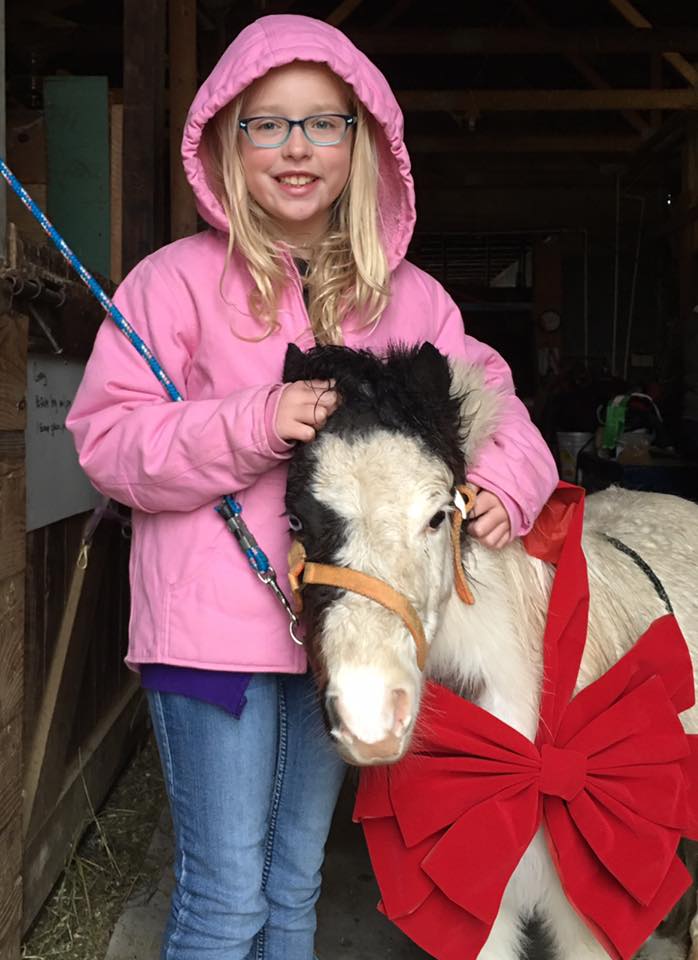
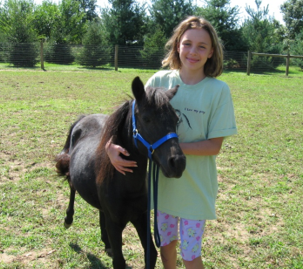
Loryn loved showing her ponies and caring for her ponies at the fair.
Midnight was the lucky pony that had the privilege of staying the week at the fair (although, I am sure that Midnight would probably disagree that it was a “privilege” to be in a tie stall for eight days straight).
Midnight’s stall was ground-zero for our entire family. It was the first place we stopped when we arrived at the fairgrounds and the place our day ended before we headed to our camper or home for the night. Midnight’s stall was also the place that we all “checked in” throughout the day.
Fair week was filled with traditions for Loryn; ordering Frazee French fries, being in the championship showmanship class, eating ten caramel apples a day (finally breaking a bracket off of her braces on the last day of the fair), barn duty with friends in the 4-H Horse and Pony barn and in the chicken barn, and dragging the little red wagon filled with her trophies to our car on the last night of the fair.
While Loryn was a monitored and protected child, once a year she was allowed to roam free inside the confines of the fairgrounds with her 4-H friends. She hung out with the horse kids, beef kids, pig kids, chicken kids, and goat kids from schools all over our county.
To this day, our family’s fair week follows all kinds of traditions that blend memories and the years together. However, one fair week that none of us will ever forget was the fair of 2008.
Loryn was 13 years old during fair week 2008. She had been working so hard with her ponies that she was anticipating a record number of trophies and awards being placed into the little red wagon at the end of the week.
She was also in a tight race for a year-end high point award, the outcome hinged on how well she placed in her classes at the fair. No one could have imagined what Mother Nature had up her sleeve for the horse show days that year.
Our St. Joseph County, Michigan fair week is during the third week of September. Fair-week’s weather is temperamental and unpredictable. We might start the week in shorts and a tank top (our skin sore from sunburn), and end the week bundled up in winter coats and boots. It might be hot and dry, or cold and wet. We never know what to expect. After all, it is Michigan. We can have pop-up thunderstorms, straight-line winds, blizzards, sunshine, sleet, and tornadoes all in the same week.
What I do not think any of us predicted was that the cranky, strong remnants of a hurricane would come barreling through our area during fair week. Sure, there have been leftovers of other hurricanes that have moved north from the Gulf of Mexico into southwest Michigan before but there was nothing quite like Hurricane Ike in 2008. Hurricane Ike still felt like the Texas-sized monster that it was in the beginning of its journey north.
The outer bands of Hurricane Ike slowly moved in on Saturday of fair week. The horse shows were on Sunday and Monday. We all checked and rechecked the forecast. There was nervous energy and a few crossed fingers that Ike would turn east earlier than anticipated, sparing Michigan from the expected torrential rains and strong winds. But there was no denying that we were going to get wet. Very wet.
Ike didn’t turn east. Ike came straight for southwest Michigan.
It rained so hard those days that it actually hurt. We were pelted. It didn’t matter how many raincoats or rain repellent layers we had on, the water forced its way into everything. The rain came down in heavy sheets. And it was not even straight down sheets of rain, it blew in sideways with heavy winds. It was relentless. The show pen was mud. The judge and ringmaster turned their back to the driving rains.
Many of the 4-H horse and pony exhibitors scratched their classes. The entries bottomed out. People gave up, packed up, and sought shelter. My cousin’s young boys had to be dragged out from underneath their horse trailer as they hid from their mother in fear that she would make them show in the rain.
Not Loryn.
Loryn was not giving up. She was determined.
Loryn’s closest competitor in the high point race was also not giving up. So, the girls and their ponies kept at it. All day.
As a mom, I second-guessed myself. Should I make Loryn stop showing? Should make her get out of her wet clothes and get into our warm, dry camper? Is the high point worth it? Is she going to get sick? Is this an okay environment for her ponies? Do I make her keep pushing through these miserable circumstances so that she learns perseverance? Do I make the decision for her? Do I let her choose if she keeps going? Will she tell me the truth? What do other parents think of me? Are they impressed that we are strong and determined? Or are they appalled that I have my kid out in these elements? Does this make me a bad mom? Does this make me a good mom?
I changed my answers to each of those questions on a minute-by-minute basis.
In the end, we were soaked and exhausted. But we stuck with it. Loryn kept showing.
Over the two-day period, five to six inches of rain drenched us. The barns at the fairgrounds were flooded. Animals had to be moved around to higher barns and stalls. Trees were uprooted. Decorations floated away. Roads were closed. Signs were ruined. Vendors were submerged. Everything was wet and soggy. We were all trying to dig out and dry out. But there was simply nowhere for the water to go. It was a fair week like no other.
One afternoon, as we were all in the midst of clean-up, I stepped out of our camper and gazed across the campgrounds towards the horse arena to see the entire pen still under many inches of brown, ugly, standing water. Yet, in that water were a bunch of kids … sliding on their bellies in the muck. Running, splashing, and jumping. Screaming, laughing, and yelling. They were having the time of their lives rolling around in what was a combination of rainwater, mud, and horse poop (the way the fairgrounds drained, there was probably some cattle poop mixed in, too). I shook my head, felt a little shiver, and went about my business.
Only later did I learn that Loryn was one of the kids belly-sliding in the horse arena “pool.” She had a blast. Yet, a few days later, an angry rash erupted all over her belly and back. No one can say that farm kids do not have great immune systems.
To this day, the fairgrounds are still an incredibly special place for my entire family. And, we have never and will never show in that type of weather again. Ever.
Loryn, the ponies, and I can proudly state that we survived a “horse show hurricane.”
Warmly,
Regina
p.s. Yes, because of Loryn’s determination, and despite Hurricane Ike, she won the highpoint award that she was after.